A mightily impressive engineering achievement, but an expensive one at that
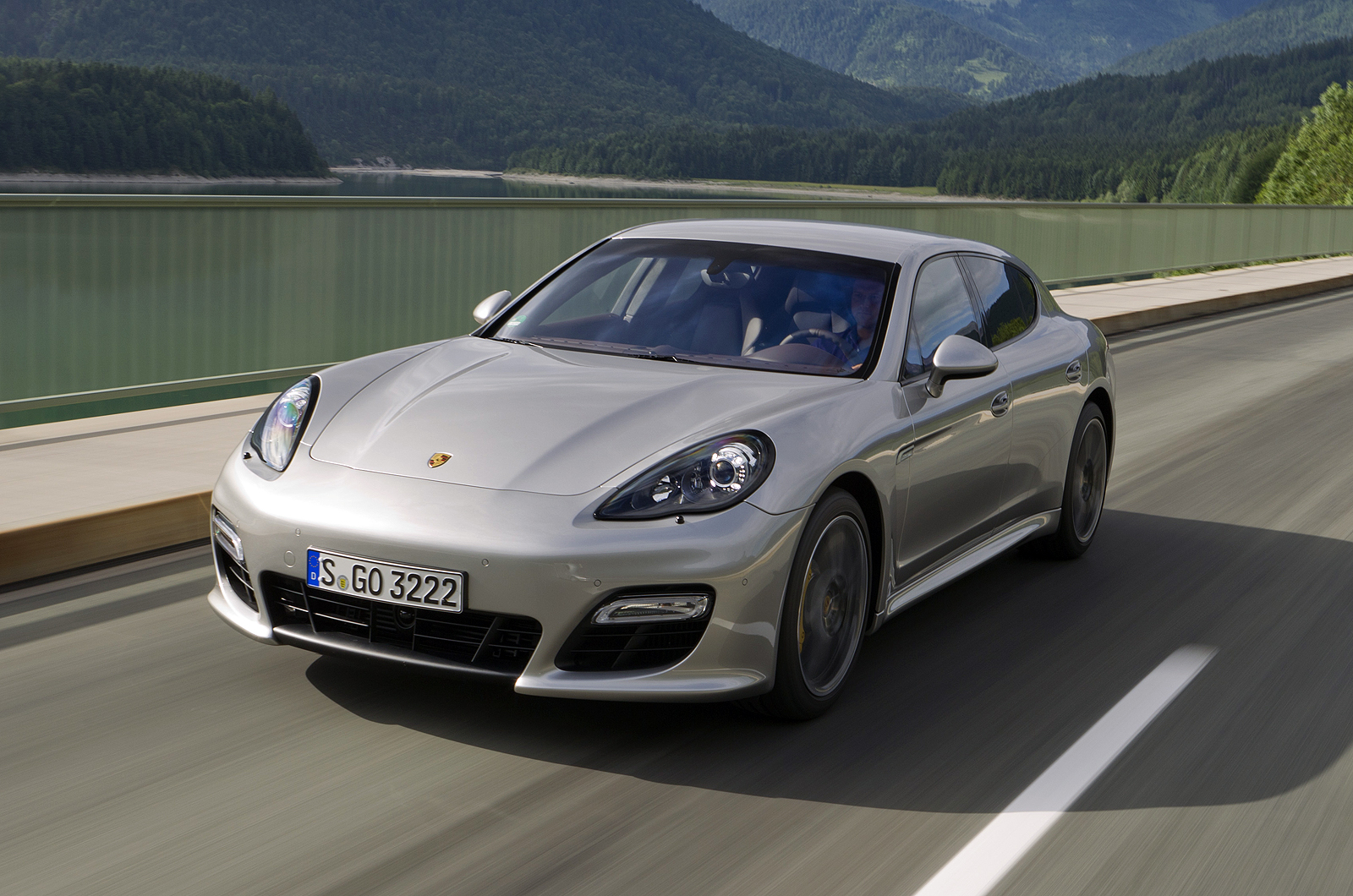
The Turbo S also gets cosmetic upgrades including side skirts, new 20-inch alloys, 5mm spacers behind the rear wheels to widen the track (Porsche says it’s an aesthetic upgrade, not a performance one), revised engine bay styling, a two-tone leather interior and its own unique agate grey metallic paint option. It also comes as standard with a sports exhaust, Porsche Active Suspension Management (PASM), Porsche Dynamic Chassis Control (PDCC) and a Sport Chrono Package, all upgrades that would be cost options on lesser Panameras.
See pics of the Porsche Panamera Turbo S in action
In-gear acceleration and overboost-enhanced kickdown are roundly impressive too, with the Turbo S capable of dispatching overtakes or reeling-in big chunks of the horizon in a manner that doesn’t befit something so large and luxurious.
But that’s nothing compared with the tricks the Turbo S’s chassis can perform. Don’t be fooled, this is no four-seat 911 in outright handling terms, but the three-mode switchable PASM, PDCC and the Porsche Torque Vectoring Plus (PTV Plus) work together to contain, control and coerce the Turbo S to the extent that it can be hustled along a mountain pass in a way that takes some adjusting to, particularly in the PASM’s lowered Sport Plus mode.
There’s an almost unnatural lack of body roll for such a big car, and it takes ham-footed stabs at the accelerator to find the limits of traction on corner exits. At times you’re aware that there’s a lot going on beyond your fundamental steering, braking and accelerator inputs, but the systems themselves aren’t overly intrusive, and they’re broadly welcome for the combination of dynamic agility and electro-mechanical safety net that they provide.
There is an overall feeling of artificiality to the way the Panamera goes about its business of devouring challenging twisty roads. It is, however, an impressive, accomplished and entertaining experience, although if you explore the limits of the Turbo S’s dynamic repertoire for too long it’s debatable whether your three passengers would enjoy the experience as much as you would from the driving seat.
As an engineering achievement the Turbo S is a mightily impressive one, but arguing a convincing case for its purchase isn’t quite so clear cut. However, at this price point purchases start to happen beyond the normal conventions of automotive buying decisions, so if you’ve got £120,000 or so gathering dust on the kitchen table then you won’t be in the least bit disappointed if you spend it on one of these.
Still, by definition and by its somewhat clumsy styling, the Panamera is not a sports car, and this four-door hatchback sedan tips the scales at well over two tons. Thankfully, the chassis does a far better job of masking the Panamera’s size and mass than does its chubby sheetmetal. The hydraulic steering is nicely weighted and provides linear feedback. Among luxury liners, the Panamera is clearly the best handling, with impeccable stability and precise turn-in, despite having to swing around the heavy V-8 and its turbo accouterments. The torque-vectoring system included with the standard Porsche Dynamic Chassis Control basically forces the Panamera into corners and makes it virtually impossible to throw the car off course with anything less than wildly exaggerated inputs and insane entry speeds. The car is ever vigilant for that stuff, though:. It’s impossible to turn off the stability-control system entirely, even if the button labeled “off” suggests otherwise. If the car is out of sorts and you tap the brakes, the system always kicks in.
Even though it includes many of the $136K Turbo’s performance options as standard, at $174,175, the Panamera Turbo S doesn’t exactly represent great value. Plus, the non-S Turbo can be upgraded to 540 hp and the same 553 lb-ft of torque with a $21,730 power package that includes the modified turbos. But the less-expensive car doesn’t have the Turbo S’s available exclusive color schemes and other cosmetic goodies—the most notable, of course, being the badge.

What is it?
This is the £122,623 Panamera Turbo S, a riotous extension of Stuttgart’s blown four-door rocketship boasting, at 543bhp, a crowd-pleasing 50bhp more than the standard Turbo. More pertinently, the Turbo S produces 553lb ft, rising to 590lb ft with overboost, compared with the non-S Turbo’s positively asthmatic 516lb ft, or overboosted 567lb ft.The Turbo S also gets cosmetic upgrades including side skirts, new 20-inch alloys, 5mm spacers behind the rear wheels to widen the track (Porsche says it’s an aesthetic upgrade, not a performance one), revised engine bay styling, a two-tone leather interior and its own unique agate grey metallic paint option. It also comes as standard with a sports exhaust, Porsche Active Suspension Management (PASM), Porsche Dynamic Chassis Control (PDCC) and a Sport Chrono Package, all upgrades that would be cost options on lesser Panameras.
See pics of the Porsche Panamera Turbo S in action
What’s it like?
This is a properly fast car laden with kit. Top speed is 191mph, which is faintly academic, while 0-62mph appears at the touch of a button, thanks to launch control, in 3.8sec, which is faintly ridiculous for a 1995kg saloon.In-gear acceleration and overboost-enhanced kickdown are roundly impressive too, with the Turbo S capable of dispatching overtakes or reeling-in big chunks of the horizon in a manner that doesn’t befit something so large and luxurious.
But that’s nothing compared with the tricks the Turbo S’s chassis can perform. Don’t be fooled, this is no four-seat 911 in outright handling terms, but the three-mode switchable PASM, PDCC and the Porsche Torque Vectoring Plus (PTV Plus) work together to contain, control and coerce the Turbo S to the extent that it can be hustled along a mountain pass in a way that takes some adjusting to, particularly in the PASM’s lowered Sport Plus mode.
There’s an almost unnatural lack of body roll for such a big car, and it takes ham-footed stabs at the accelerator to find the limits of traction on corner exits. At times you’re aware that there’s a lot going on beyond your fundamental steering, braking and accelerator inputs, but the systems themselves aren’t overly intrusive, and they’re broadly welcome for the combination of dynamic agility and electro-mechanical safety net that they provide.
There is an overall feeling of artificiality to the way the Panamera goes about its business of devouring challenging twisty roads. It is, however, an impressive, accomplished and entertaining experience, although if you explore the limits of the Turbo S’s dynamic repertoire for too long it’s debatable whether your three passengers would enjoy the experience as much as you would from the driving seat.
Should I buy one?
And with performance like this on offer you can start to forgive the Panamera’s more challenging aesthetic disadvantages, but even so, nigh-on £123k is a lot of money to spend in order to transport four people, even if you do want to do so (very) quickly and quite luxuriously. And if you only want to use all four seats on occasion, then the Panamera, any Panamera, is a lot of car to be driving around in for the rest of the time.As an engineering achievement the Turbo S is a mightily impressive one, but arguing a convincing case for its purchase isn’t quite so clear cut. However, at this price point purchases start to happen beyond the normal conventions of automotive buying decisions, so if you’ve got £120,000 or so gathering dust on the kitchen table then you won’t be in the least bit disappointed if you spend it on one of these.
Germans Have All the Fun
Few Panamera owners are as fortunate as those on the car’s German home turf, where it is legal to take it up to its top speed, so unless you like jail—and what Porsche owner with 175 large lying around doesn’t—you’ll have to take our word for the ultra-high-speed performance of this car. At virtually any velocity, this quickest of the four-door Porsches will charge forward with a menacing growl. It’s unlike, say, the Mercedes-Benz S600 or the BMW 760i, in which speed builds in surreal silence, and it doesn’t take a very long stretch of road to max out the Panamera. That’s not to say it’s a white-knuckle affair. This Turbo S masks actual speed very well, and 120 mph feels like 70. Remarkably, however, the Panamera might be even more efficient at killing speed than building it up, especially when equipped with the optional carbon-ceramic brakes, which bite instantly and aggressively.Still, by definition and by its somewhat clumsy styling, the Panamera is not a sports car, and this four-door hatchback sedan tips the scales at well over two tons. Thankfully, the chassis does a far better job of masking the Panamera’s size and mass than does its chubby sheetmetal. The hydraulic steering is nicely weighted and provides linear feedback. Among luxury liners, the Panamera is clearly the best handling, with impeccable stability and precise turn-in, despite having to swing around the heavy V-8 and its turbo accouterments. The torque-vectoring system included with the standard Porsche Dynamic Chassis Control basically forces the Panamera into corners and makes it virtually impossible to throw the car off course with anything less than wildly exaggerated inputs and insane entry speeds. The car is ever vigilant for that stuff, though:. It’s impossible to turn off the stability-control system entirely, even if the button labeled “off” suggests otherwise. If the car is out of sorts and you tap the brakes, the system always kicks in.
Beautiful Inside, at Least
As in other Panameras, the Turbo S’s front- and rear-seat room is adequate for its class of short-wheelbase luxury cars, and the tall center console front and rear is nicely styled and looks expensive and tasteful. Being sealed inside would be a flawless experience if not for the occasional creak and a few joints and seams that aren’t up to, say, Audi standards.Even though it includes many of the $136K Turbo’s performance options as standard, at $174,175, the Panamera Turbo S doesn’t exactly represent great value. Plus, the non-S Turbo can be upgraded to 540 hp and the same 553 lb-ft of torque with a $21,730 power package that includes the modified turbos. But the less-expensive car doesn’t have the Turbo S’s available exclusive color schemes and other cosmetic goodies—the most notable, of course, being the badge.

No comments:
Post a Comment